August 25, 2025
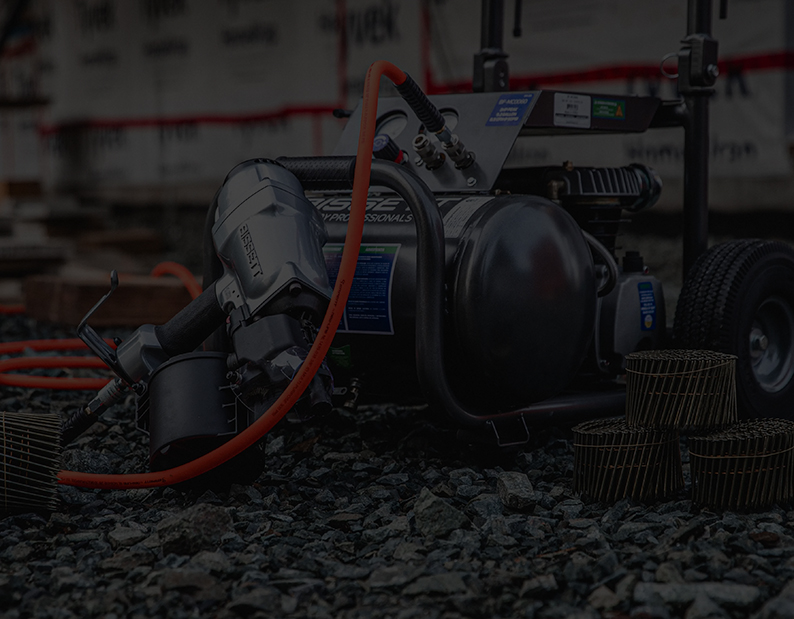
Coil nails are the go-to fastener for high-volume, high-speed applications. If you’re framing houses, sheathing walls, or building pallets, you’ll want to keep reading. At Bissett, we offer a wide range of coil nails that are compatible with all major 15-degree coil nailers on the market.
Let’s break down what you need to know to choose the right coil nail for the job.
What Are Coil Nails?
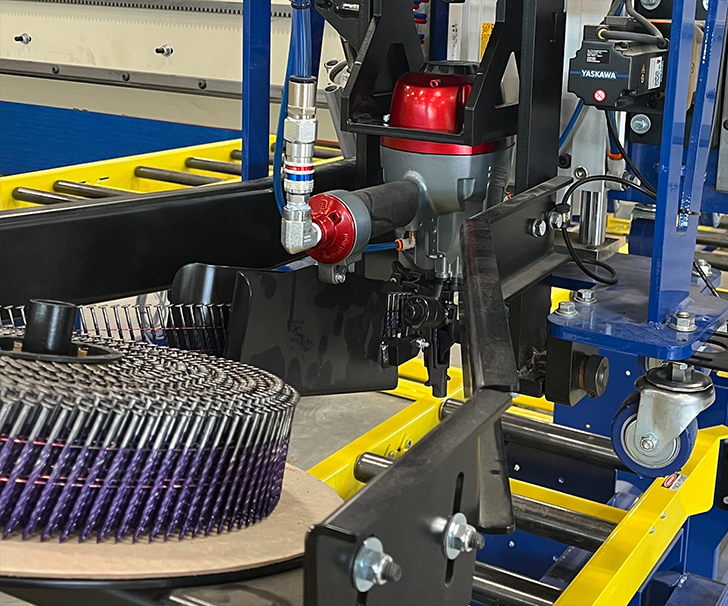
Coil nails are collated in a spiral formation using either welded wire or plastic collation. They’re designed to be loaded into a coiled magazine on a pneumatic nailer, which drastically reduces reload time on the jobsite.
Pro Tip: A coil nailer typically holds over 200 nails per load, saving time and boosting productivity compared to traditional stick nailers.
Bissett Coil Nails: Always 15-Degree Collation
All Bissett coil nails are collated at a 15° angle, ensuring seamless compatibility with leading brands like Bostitch, MAX, Metabo HPT, and more.
Use our Fastener Finder to verify tool compatibility.
4 Primary Coil Nail Coatings
We categorize Bissett coil nails by coating type, based on application environment and rust resistance:
1. Brite Nails
- No coating – ideal for indoor or covered construction
- Used in:
- Framing
- Subflooring
- Sheathing
- Crate & pallet assembly
- Over 30 Brite options available
- Lengths: 1″ to 4½”
- Diameters: .080″ to .162″
Fastening Tip:
- Thinner nails = reduced wood splitting
- Thicker nails = greater holding power
2. Hot-Dipped Galvanized (HDG)
- Dipped in molten zinc for maximum rust protection
- Ideal for siding, decking, outdoor framing
- Most HDG nails feature ring or spiral shanks for increased shear strength
- Trim-friendly option: Smooth shank casing nails also available
Important: Zinc may react with cedar, redwood, or pressure-treated lumber, causing staining.
3. Electro-Galvanized
- Light zinc coating via electrical process
- Offers basic protection
- Used where nails are not directly exposed (e.g., underlayment or internal roofing layers)
4. Stainless Steel
- Best-in-class rust resistance
- Recommended for:
- Cedar or redwood
- Saltwater exposure
- Coastal construction
- Though more expensive, Stainless Steel nails last the longest in harsh conditions
Coil Nail Shank Types: Choosing the Right One
• Smooth Shank
- Easiest to drive into dense hardwoods
- Lower holding power
- Used for interior framing, trim, or temporary forms
• Ring Shank
- Best for maximum withdrawal resistance
- Ideal for siding, decking, and high-shear areas
• Spiral Shank
- Twists into material like a screw
- Offers excellent grip in softwoods like SPF
Specialty Coil Nails
Roofing Nails
- Shank: Always .120″
- Length: 1″ to 1¾”
- Head: Large diameter for shingle hold
- Most are Electro-Galvanized, but HDG options available for higher corrosion resistance
- Must be used with roofing-specific nailers
Roofing coil nailers feature specialized nose pieces for proper head placement.
Duplex Coil Nails
- Two heads for temporary formwork (e.g., concrete forms)
- Top head remains exposed for easy removal
- Great for jobsite efficiency, though not as widely used with coil nailers due to power tool limitations
If formwork is routine in your work, consider investing in a gas compressor and Duplex coil nailer to save on labour long-term.
Final Safety Reminder
Always wear appropriate PPE when operating pressurized nailers. Nailers are efficient, but they pack power. Protect your eyes, hands, and hearing.